

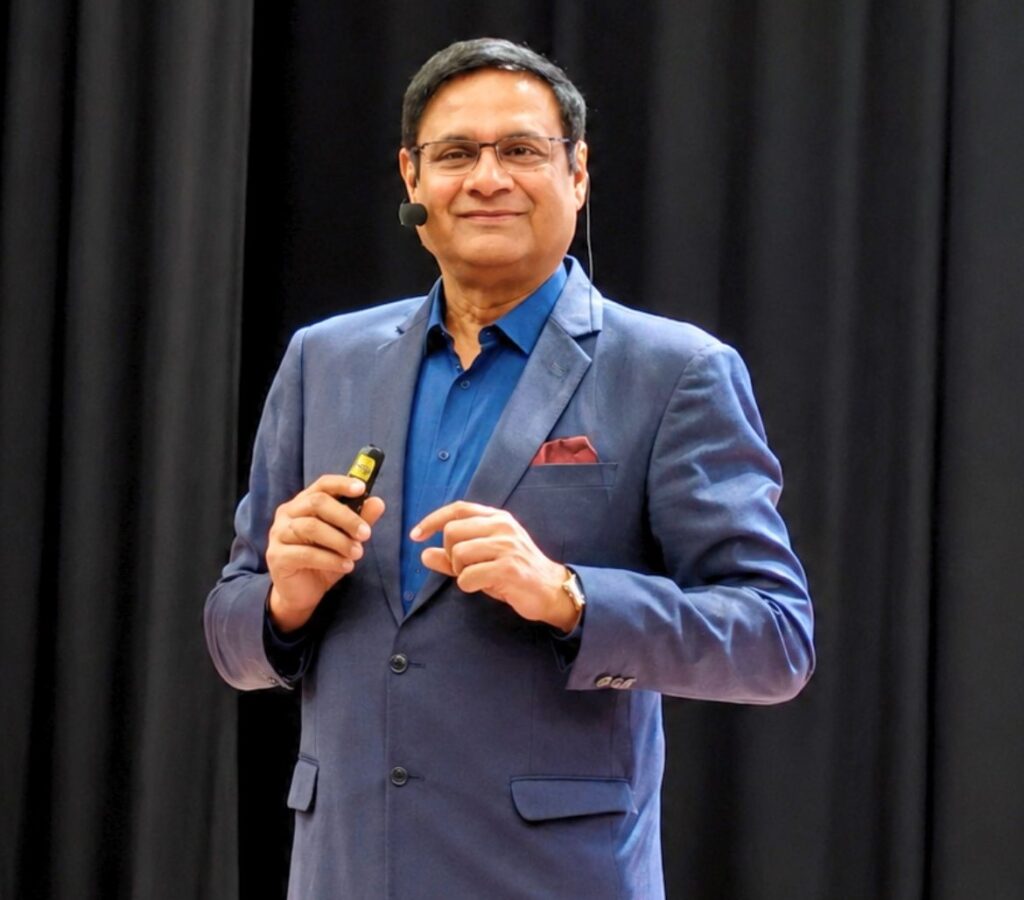
“The shift from answering to coaching is not about becoming a leader who says less. It is about becoming a leader whose conversations help others think more.”
Your team brings you ten problems. You solve all ten.
A productive day?…..Perhaps.
But here is the harder question: what happens when the eleventh problem arrives—and you are not there?
Being the person with the answers can feel like proof of good leadership.
But are you building your team’s capability—or their dependence on you?
The hidden cost of being helpful
A question I often ask leaders in my workshops is:
“If you were unavailable for two weeks, how many decisions in your team would come to a halt?”
It usually brings a smile. Then a moment of reflection.
Over the years, while coaching leaders and conducting leadership programmes, I have noticed a familiar pattern.
A team member brings a problem. The leader recognises it, offers a solution, and gets things moving.
The leader feels useful. The team member feels relieved.
But one question remains:
What has the person learned that will help them handle the next situation?
There is nothing wrong with providing answers. Experience and expertise matter.
The challenge begins when giving answers becomes our automatic response—even when the person is ready to think further.
Solving today’s problem matters. But so does developing the person who will face tomorrows.
Why ownership matters
Self-Determination Theory, developed by psychologists Edward Deci and Richard Ryan, offers a useful perspective. It identifies three psychological needs that support motivation: autonomy, competence, and relatedness. In everyday language, people need a sense of ownership, the ability to be effective, and a connection with others.
For a leader, this suggests a practical balance:
Give people room to contribute. Help them build capability. Stay available to support them.
Asking someone to think is not the same as leaving them to struggle.
The message should be:
“I believe you can contribute to this decision—and I am here to help you work through it.”
Replace your immediate answer with three questions
The next time someone asks, “What should I do?”, pause. Try saying: “Before I share my thoughts, talk me through yours.”
Then ask three questions—not as an interrogation, but as a conversation.
Understand their perspective before offering your own.
A useful follow-up is:
“What do we know for certain, and what do we still need to find out?”
Encourage them to move beyond the first possible response.
The intention is not to make a simple decision complicated. It is to help the person consider alternatives rather than wait for instructions.
This is where their judgment enters the conversation.
“What risk might we be overlooking?” “What information would change your view?”
You can then add your expertise where it is needed, rather than take over the entire decision.
What this looks like in practice
A coaching question loses its value if the person still has to guess what they are allowed to decide.
“Take ownership” needs to be followed by clarity:
Without clear boundaries, hesitation can look like a lack of confidence when it is actually uncertainty about authority.
Close with action—and return to the learning
Before the person leaves, agree on three things:
“What will you do next?”
“What support do you need?”
“When should we review the outcome?”
Then make the review a learning conversation, not just a status update.
This week, choose one routine, low-risk conversation where you would normally provide the solution.
Then reflect on your own contribution:
“Did I do the thinking for them—or help them think more clearly?”
The shift from answering to coaching is not about becoming less helpful.
It is about making your help more developmental.
Your team will always value your experience. But they do not need every answer to come from you.
Sometimes, the most valuable thing you can offer is a question, the patience to listen, and the support to let someone act.
Because leadership is not only about the decisions you make.
It is about the judgment you help others develop.
Leadership Reflection
What is one question you could ask more often instead of immediately giving the answer?
Leadership Beyond the Workshop is a fortnightly newsletter by Prakash Rohera, corporate trainer, motivational speaker, and leadership coach, exploring how leadership lessons are lived, not just learned.